

System-Resilient Portfolios: How Wealth Survives When Financial Systems Don’t
Most wealth strategies are built for normal markets.
System-resilient portfolios are built for abnormal outcomes.
For SMSF trustees, high-net-worth families, family offices and business owners, the greatest long-term risk is no longer market volatility alone — it is systemic fragility.
This article explains:
- what system-resilient portfolios really are
- why traditional diversification fails during system stress
- how sophisticated investors structure wealth to survive inflation, banking stress, liquidity freezes and policy shifts
- which assets remain functional when systems break
- and how to build resilience without abandoning growth
This is not about fear.
It is about designing portfolios that still work when assumptions fail.
What Is a System-Resilient Portfolio?
A system-resilient portfolio is one that continues to function when one or more of the following fail:
- banking access
- liquidity
- digital infrastructure
- financial intermediaries
- counterparties
- regulatory certainty
- currency purchasing power
It is not designed to “beat the market”.
It is designed to outlive financial stress events.
This distinction matters.
Why Traditional Diversification Breaks During System Stress
Most portfolios are diversified within the same system.
Typical diversification looks like:
- Australian shares
- global shares
- bonds
- property
- cash
- managed funds / ETFs
On paper, this looks balanced.
In reality, these assets share common dependencies:
- banks
- market liquidity
- clearing systems
- custodians
- digital access
- regulatory permission
When the system is stressed, correlation spikes.
This is exactly what occurred during:
- the Global Financial Crisis
- COVID market dislocations
- bond market instability
- banking failures overseas
- inflation shocks
The result: everything moves together — usually down.
System resilience requires assets that do not share the same failure points.
The Difference Between Market Risk and System Risk
Most investors understand market risk:
- price volatility
- drawdowns
- cycles
Fewer understand system risk:
- loss of access
- liquidity freezes
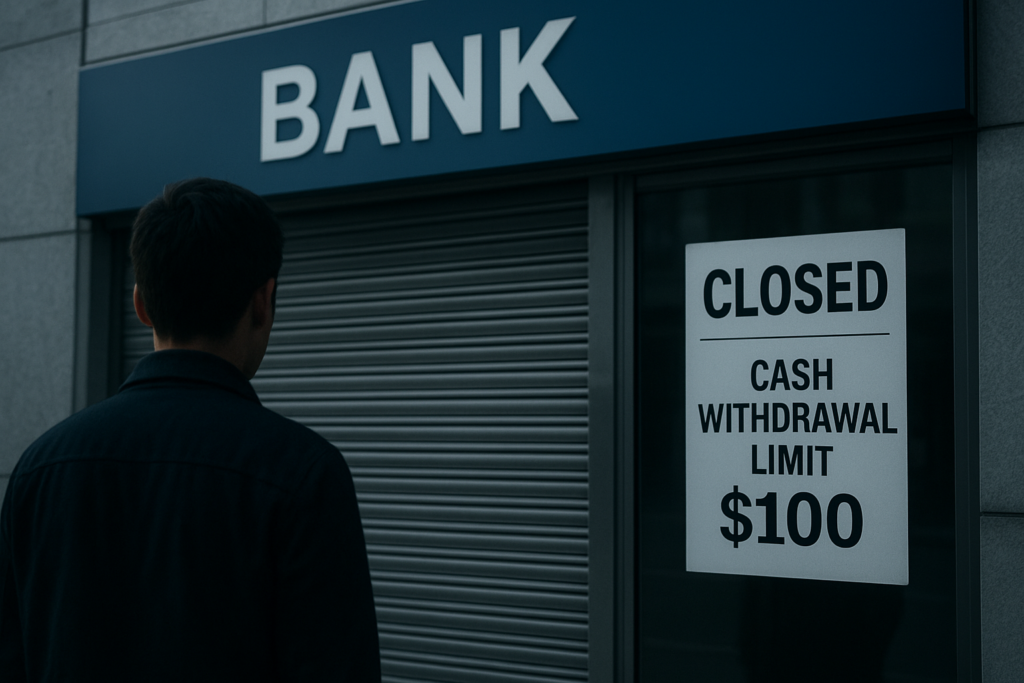
- withdrawal restrictions
- counterparty failure
- currency debasement
- regulatory intervention
A system-resilient portfolio addresses both forms of risk.
This is why sophisticated investors separate assets into two layers.
The Two-Layer Portfolio Model Used by Sophisticated Investors
Layer 1 — Growth Assets (System-Dependent)
These assets grow wealth during normal conditions:
- equities
- private businesses
- property
- managed funds
- ETFs
They rely on:
- markets functioning
- liquidity
- counterparties
- digital infrastructure
They are essential — but not sufficient on their own.
Layer 2 — Resilience Assets (System-Independent)
These assets preserve wealth during abnormal conditions:
- physical gold
- physical silver
- physical platinum
- privately stored tangible assets
- assets with no counterparty risk
They are designed for:
- inflation
- monetary expansion
- banking stress
- access risk
- long-term purchasing-power preservation
This structure does not replace growth.
It stabilises it.
Why Physical Precious Metals Anchor System-Resilient Portfolios
Physical precious metals have properties that financial assets do not:
- no counterparty risk
- no reliance on banking systems
- no dependence on digital access
- global liquidity
- long monetary history
- independence from fiscal policy
Central banks understand this — which is why gold remains a core reserve asset
(World Gold Council).
Gold, silver and platinum do not exist as promises.
They exist as property.
Inflation: The Silent System Risk Most Portfolios Ignore
Inflation is not a market event.
It is a structural system effect.
Even modest inflation compounds into substantial loss of purchasing power over time — a fact well documented by Australia’s statistical authorities the Australian Bureau of Statistics.
Cash-heavy portfolios feel “safe” — until they aren’t.
System-resilient portfolios protect real value, not nominal balances.
Counterparty Risk: The Risk Embedded in Almost Everything
If an asset requires someone else to perform, honour, pay, settle or allow access — it carries counterparty risk.
This includes:
- bank deposits
- ETFs
- managed funds
- bonds
- insurance contracts
- digital platforms
Physical bullion stored independently does not.
That is why family offices and SMSFs increasingly isolate a portion of wealth outside the financial system entirely.
Why Storage Location Is Part of Portfolio Design
Owning resilient assets is only half the equation.
Where they are stored matters.
Bank vaults:
- sit inside the banking system
- may be inaccessible during disruptions
- provide no contents insurance
Private, non-bank vaulting removes these dependencies.
This is why system-resilient portfolios use independent custody for resilience assets
What a System-Resilient Portfolio Actually Achieves
A properly designed system-resilient portfolio:
- smooths volatility
- preserves purchasing power
- reduces behavioural stress
- protects against rare but severe outcomes
- allows investors to stay invested elsewhere
- survives regulatory and systemic change
It does not chase returns.
It protects optionality.
Who Needs System-Resilient Portfolios Most?
- SMSF trustees with long horizons
- High-net-worth individuals
- Family offices
- Business owners with concentrated risk
- Anyone holding significant cash balances
If your wealth depends entirely on systems working perfectly — you do not have resilience.
Conclusion: Resilience Is Not Pessimism — It Is Intelligent Design
System-resilient portfolios are not built out of fear.
They are built out of experience.
History shows:
- systems change
- rules evolve
- currencies weaken
- access can be restricted
- liquidity disappears when it is needed most
The investors who survive are not the ones who predict crises.
They are the ones who designed portfolios that did not depend on prediction.
Gold.
Silver.
Platinum.
Stored independently.
This is how wealth survives system stress — and why system-resilient portfolios are becoming the new standard among sophisticated investors.
📞 1300 888 782
🔐 Learn how private vault storage supports system-resilient portfolios


2 months free. No long-term commitment necessary. Limited spots available.
