
Platinum: The Most Undervalued Precious Metal on Earth (And Why Smart Investors Are Quietly Accumulating It).
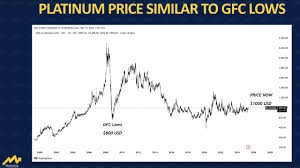
Everyone knows gold is the classic “store of value.” Many Australians now understand silver’s role in both money and industry. But platinum? It’s still misunderstood, under-owned, and often overlooked—despite being one of the rarest, most strategically important metals on the planet.
If you’re an Australian investor looking for hard-asset protection with asymmetric upside potential, platinum deserves serious attention. Not as hype. Not as a punt. As a mispriced, supply-sensitive, real-world industrial metal that can also be held privately as physical bullion—outside the banking system.
This guide explains why platinum is frequently described as “undervalued,” what could change that, and how to buy and store it properly (because storage is part of the investment).
What Makes Platinum Different From Gold and Silver?
Platinum sits right next to gold on the periodic table and shares many “noble” properties—high corrosion resistance, durability, and scarcity. But it also has something gold doesn’t:
Platinum is deeply industrial
Platinum’s value is tied to real industrial demand, especially in catalysts and emerging energy technologies. That creates a different kind of price behaviour than gold (which is primarily monetary/investment demand).
Platinum is also “quiet money”
Physical platinum bullion can be held as a private hard asset, much like gold—particularly when stored in an independent vault rather than a bank.
For investors, this mix is powerful:
- Scarce supply
- Hard-to-substitute industrial use
- Potential for strong mean reversion cycles
- Physical ownership possible
Why Many Investors Believe Platinum Is Undervalued
“Undervalued” isn’t a promise. It’s a setup: price trading below what the fundamentals suggest could be justified if conditions tighten.
Here are the big drivers investors watch:
Supply is concentrated in a fragile pipeline
A large share of global platinum mine supply comes from South Africa—creating a single-region dependency that can amplify supply shocks. Reuters notes South Africa accounts for over 70% of global platinum production.
When supply is that concentrated, disruptions matter more.
Demand can surge faster than supply can respond
Platinum isn’t a metal where new supply switches on overnight. Mine development and ramp-ups take years—so when industrial demand rises or inventories tighten, price can move quickly.
Platinum tends to move in cycles
Platinum historically has periods of being ignored… then suddenly repriced when:
- industrial constraints show up,
- substitution shifts occur,
- investor interest returns,
- supply disruptions hit.
That’s why experienced metals investors often accumulate before the narrative becomes mainstream.
Platinum and the Hydrogen Theme
One reason platinum keeps coming up in “future demand” conversations is hydrogen—especially fuel cells and related systems where platinum-group catalysts play critical roles.
Platinum in PEM fuel cells
Platinum is widely used as a catalyst material in proton exchange membrane fuel cells (PEMFCs). A Johnson Matthey technical review describes platinum as the catalyst material used for both anode and cathode in PEM fuel cells. Johnson Matthey Technology Review
A broader scientific review also discusses PEMFCs as an energy conversion device using electrochemical reactions, highlighting why catalyst performance matters. PubMed Central
This doesn’t mean “platinum price must go up tomorrow.” It means platinum has real technological demand pathways that can strengthen over time.
Ratios: How Smart Investors Think About Relative Value
Professional metals investors don’t only look at price in isolation. They look at relative value using ratios, such as:
- Gold-to-platinum ratio
- Silver-to-platinum ratio
- Gold-to-silver ratio
When platinum gets extremely “cheap” relative to gold or silver (by historical standards), it can signal a potential rotation opportunity—especially if the fundamentals (supply tightness + industrial demand) start aligning.
Ratios are not guarantees—but they’re a framework for positioning before the crowd.
Paper Platinum vs Physical Platinum: Why Ownership Structure Matters
If your goal is wealth protection (not just trading exposure), structure matters:
Paper exposure (ETFs/derivatives/unallocated accounts)
- convenient to trade
- but introduces counterparty and system risk
- can be affected by market mechanics, trading halts, redemption rules, and custody layers
Physical platinum bullion
- you own the metal itself
- no issuer solvency risk in the same way
- can be held privately, and transferred across generations
If you want platinum as a sovereignty asset, physical bullion is the point.
You can buy physical platinum through Gold Bullion Australia (GBA) and keep it as true, directly-owned metal.
Storage: The Part Most Investors Get Wrong
Buying bullion is only half the strategy. The other half is storage.
Why home storage often fails (even for “serious” investors)
- targeted theft risk rises if people know you hold bullion
- fire and water damage are real (and underappreciated)
- insurance is often limited, conditional, or expensive
- privacy risk is tied to your home address
Why bank vaults aren’t the “gold standard” anymore
- limited access (branch hours, closures)
- no meaningful privacy model for modern concerns
- insurance is often not included for contents (varies; commonly excluded)
- not purpose-built for bullion workflows
The “vault” solution serious investors choose
For investors who want privacy, control, and professional-grade protection, the best model is private, independent vaulting.
At Private Vaults Australia (PVA), you can store platinum (and other metals) in a safe deposit box / safe deposit locker setup designed for real-world risks, not old assumptions:
- independent, non-bank vaults
- high-security access protocols
- private client appointments and discretion
- exclusive client-key control (so your access is not “policy-based”—it’s structural)
Why Platinum + Private Vaulting Is a High-Conviction Combination
When investors describe platinum as an opportunity, they’re usually seeking three outcomes:
1) Hard-asset protection outside the banking system
Physical platinum stored in a non-bank vault sits outside bank balance sheets and typical banking-system constraints.
2) Upside optionality if the market reprices the metal
If supply tightens, industrial demand rises, or investor interest returns, platinum can move sharply because it is smaller and less widely held than gold.
3) Privacy + control, not “trust-me” custody
The point of bullion is ownership. Storage should reinforce that—not dilute it.
Next Steps: Buy and Store Platinum the Right Way
If you’re accumulating platinum for the long game, do it with the same discipline you’d use for any serious wealth strategy:
- Buy physical platinum through GBA
- Store privately at PVA (Brisbane & Sunshine Coast)
- Understand the security model
📞 1300 888 782
📍 Unit 3 – 73 Redcliffe Parade, Redcliffe


2 months free. No long-term commitment necessary. Limited spots available.
