
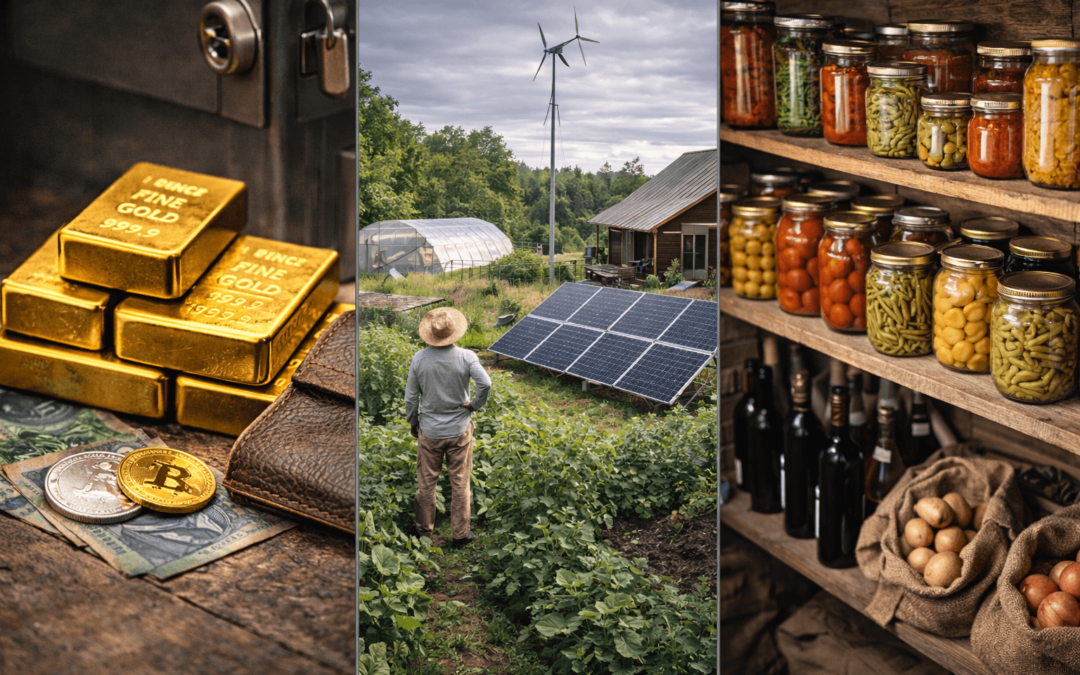
Off-Grid Assets: Why the Wealthiest Investors Hold Assets Outside the Financial System
Modern wealth is increasingly on-grid.
It lives inside:
- banks
- platforms
- custodians
- digital ledgers
- regulatory frameworks
- permission-based systems
For most investors, this feels normal.
For sophisticated investors, it represents concentration risk.
This is why SMSF trustees, high-net-worth individuals, family offices and business owners increasingly allocate part of their wealth to off-grid assets — assets that exist outside the financial system and remain functional even when it is stressed.
This article explains:
- what off-grid assets really are
- why traditional portfolios are becoming more grid-dependent, not less
- how off-grid assets reduce systemic, access and counterparty risk
- which assets qualify as genuinely off-grid
- and how these assets are integrated into modern wealth structures
This is not about abandoning the system.
It is about not being trapped inside it.
What Are Off-Grid Assets?
Off-grid assets are assets that do not require the financial system to function.
They are not dependent on:
- banks
- markets
- clearing houses
- custodians
- digital infrastructure
- ongoing permission
- third-party performance
They exist as property, not promises.
If systems pause, fail, freeze or change rules — off-grid assets remain accessible, ownable and valuable.
Why Modern Wealth Is Becoming More On-Grid
Over the last two decades, wealth has shifted almost entirely into system-based structures:
- superannuation platforms
- ETFs and managed funds
- digital banking
- app-based investing
- cloud custody
- paper claims replacing physical ownership
This has created efficiency — but also single-point vulnerability.
During periods of stress:
- access can be restricted
- withdrawals delayed
- redemptions halted
- liquidity repriced
- rules changed
These are not hypothetical risks — they are structural realities observed repeatedly in global markets.
The Three Core Risks Off-Grid Assets Address
- Counterparty Risk
If an asset requires someone else to:
- pay you
- redeem it
- honour a claim
- remain solvent
…it carries counterparty risk.
Off-grid assets remove this dependency.
- Access Risk
Wealth that exists digitally can become inaccessible:
- during outages
- cyber incidents
- regulatory freezes
- systemic stress
Off-grid assets prioritise possession and control.
- Systemic Risk
Financial systems are complex, leveraged and interconnected.
When stress occurs, it spreads quickly.
Off-grid assets sit outside the blast radius.
What Qualifies as a True Off-Grid Asset?
Not all “alternatives” are off-grid.
To qualify, an asset must meet all of the following:
- physical or directly controlled
- no reliance on a financial intermediary
- no counterparty obligation
- accessible without system permission
- not a derivative or claim
By this definition, the most widely recognised off-grid assets are physical precious metals.

Why Physical Precious Metals Are Core Off-Grid Assets
Gold, silver and platinum share unique characteristics:
- physical existence
- universal recognition
- global liquidity
- no counterparty risk
- long monetary history
They are not dependent on:
- issuer solvency
- platform access
- clearing systems
- regulatory goodwill
This is why gold remains a reserve asset held by central banks globally.
Silver and platinum add industrial demand dynamics that strengthen long-term relevance.
Off-Grid Does NOT Mean Unstructured or Non-Compliant
A common misconception is that off-grid assets are:
- informal
- unregulated
- non-compliant
In reality, sophisticated investors use structured off-grid custody:
- documented ownership
- insured storage
- audit trails
- independent vaulting
- SMSF-compliant frameworks
This allows investors to maintain compliance without system dependency.
Why Storage Is the Deciding Factor
Owning an off-grid asset is meaningless if it is stored on-grid.
For example:
- bank safe deposit boxes remain inside the banking system
- home storage introduces insurance, theft and disaster risk
True off-grid custody requires:
- non-bank vaulting
- exclusive key control
- no staff access
- independence from APRA or bank resolution processes
Private, independent vaulting achieves this.
Inflation: The On-Grid Wealth Erosion Most Investors Ignore
Cash and financial assets lose purchasing power over time — a fact confirmed by long-term inflation data.
Off-grid assets, particularly precious metals, preserve real value across decades, not just market cycles.
This is why off-grid allocations are increasingly viewed as structural protection, not tactical trades.
How Sophisticated Portfolios Integrate Off-Grid Assets
Off-grid assets are not held in isolation.
They are integrated as:
- capital preservation layers
- system insurance
- liquidity stabilisers
- long-term purchasing power anchors
This allows investors to:
- take risk elsewhere
- remain invested during volatility
- avoid forced selling
- maintain optionality
The goal is not maximum return.
The goal is maximum resilience.
Who Benefits Most From Off-Grid Assets?
- SMSF trustees with long horizons
- High-net-worth families
- Business owners with operating risk
- Family offices managing generational wealth
- Investors holding large cash balances
If your wealth exists entirely within digital, permission-based systems — you are fully exposed to system behaviour.
Conclusion: Off-Grid Assets Are About Freedom, Not Fear
Off-grid assets do not replace financial systems.
They balance them.
They provide:
- independence
- continuity
- access
- stability
- control
As systems become more complex, regulated and interconnected, the value of assets that require no system at all increases.
Gold.
Silver.
Platinum.
Held privately.
Stored independently.
This is why off-grid assets are becoming a permanent feature of sophisticated wealth structures.
📞 1300 888 782
🔐 Explore independent storage for off-grid assets


2 months free. No long-term commitment necessary. Limited spots available.
