
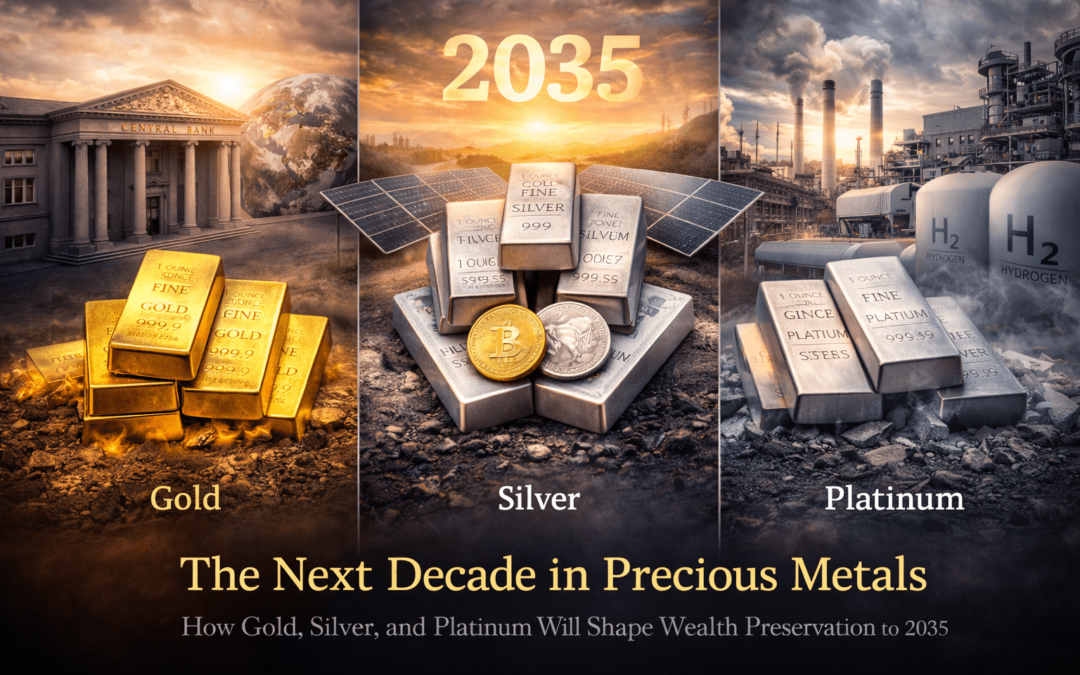
The Next Decade in Precious Metals: How Gold, Silver and Platinum Will Shape Wealth Preservation to 2036
For the first time in decades, the global financial system is entering a period where multiple structural forces are converging at once.
Not cycles.
Not temporary shocks.
But deep, long-term shifts that will define how wealth is preserved over the next 10–15 years.
For SMSF trustees, high-net-worth individuals, family offices and business owners, this raises a critical question:
Which assets will still matter — and still work — by 2036? And what will the next decade in precious metals look like?
This pillar article examines why precious metals are moving from “alternative” to “essential”, how gold, silver and platinum will behave differently in the next decade, and why physical ownership — stored independently — is becoming non-negotiable.
The Macro Backdrop: Why the Next Decade Is Different
The coming decade will not resemble the last.
The financial system now faces simultaneous pressures:
- structurally high sovereign debt
- persistent inflation risk
- declining currency confidence
- geopolitical fragmentation
- energy transition demands
- increasing financial repression
- digital-only wealth concentration
- rising counterparty exposure
Central banks cannot resolve these pressures without currency debasement or financial repression — and often both.
The Reserve Bank of Australia and other global central banks openly acknowledge that higher debt loads limit how far interest rates can rise without destabilising governments and banking systems.
This environment historically favours hard, non-yield-dependent assets.
Gold: The Anchor Asset of the Next Decade
Gold’s role over the next decade is not speculative.
It is structural.
Gold thrives when:
- real interest rates remain low or negative
- debt levels constrain policy
- currencies weaken over time
- confidence in financial systems erodes
- capital seeks neutrality and permanence
Central banks are already positioning accordingly.
The World Gold Council confirms that central bank gold purchases are at multi-decade highs — a clear signal from the institutions closest to monetary risk.
What Gold Will Do to 2036
- Preserve purchasing power
- Offset currency dilution
- Act as portfolio ballast during volatility
- Provide liquidity during systemic stress
- Anchor long-term wealth strategies
Gold will not be about “timing the top.”
It will be about not losing ground while currencies do.
Silver: The Strategic Outperformer in a Electrifying World
Silver enters the next decade with a dual-demand profile no other metal possesses.
It is both:
- a monetary metal
- a critical industrial input
Over 55% of annual silver demand already comes from industry — and that percentage is rising rapidly.
The Silver Institute highlights accelerating demand from:
- solar panel manufacturing
- electric vehicles
- energy storage
- electronics
- medical technology
Unlike gold, silver is consumed.
Once used, it is rarely recovered economically.
Why Silver Matters to 2036
- chronic supply deficits
- declining mine grades
- limited substitution options
- rising energy transition demand
- historical undervaluation vs gold
For investors, silver represents asymmetry — higher volatility, but stronger upside during commodity cycles.
In the next decade, silver is likely to outperform gold during expansionary and reflationary phases, while still retaining monetary protection.
Platinum: The Quiet Repricing Story
Platinum is entering the decade deeply undervalued, misunderstood, and structurally constrained.
Its drivers are not speculative.
They are industrial and strategic.
Platinum is essential for:
- hydrogen fuel cells
- emissions control systems
- advanced chemical processes
- future energy infrastructure
Unlike gold and silver, platinum supply is geographically concentrated, creating geopolitical and supply-chain risk.
As the hydrogen economy matures, platinum demand is expected to rise while mine supply remains tight.
Platinum’s Role to 2036
- industrial scarcity premium
- energy transition leverage
- diversification from gold/silver cycles
- exposure to re-industrialisation trends
For portfolios, platinum offers non-correlated upside within the precious-metals complex.
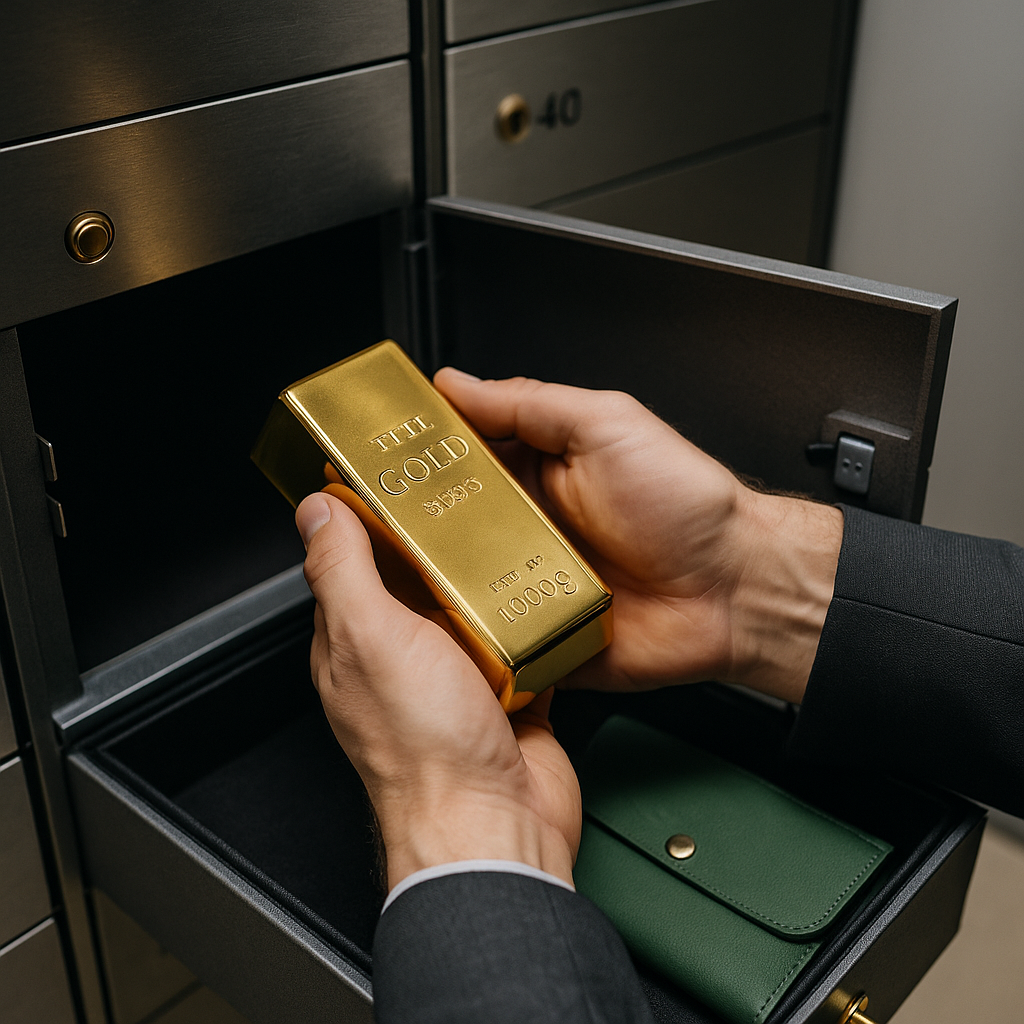
Physical Precious Metals
Why the Next Decade in Precious Metals Favours Physical (Not Paper Exposure)
As financial systems grow more leveraged and digitised, the distinction between ownership and exposure becomes critical.
Paper metals (ETFs, pooled accounts, unallocated programs) introduce:
- counterparty risk
- redemption constraints
- custodial dependency
- regulatory exposure
- systemic correlation
Physical metals eliminate these risks — when stored correctly.
Owning physical bullion through Gold Bullion Australia and storing it independently via Private Vaults Australia creates a structure that exists outside the banking system.
This distinction will matter more — not less — as digital-only wealth grows.
Storage Will Matter as Much as Ownership
By 2036, where assets are stored will be as important as what assets are owned.
Bank storage introduces:
- access risk
- bail-in exposure
- branch closures
- regulatory interference
- lack of contents insurance
Private vaulting offers:
- non-bank independence
- exclusive keyholder control
- insured custody
- audit-ready documentation
- continuity during system stress
The next decade favours resilient structures, not convenience.
The Strategic Allocation Shift Already Underway
Sophisticated investors are not abandoning traditional assets.
They are rebalancing risk.
Increasingly, portfolios are structured as:
- growth assets (equities, property, businesses)
- liquidity assets (cash equivalents)
- system-resilient assets (physical precious metals)
This is not pessimism.
It is portfolio engineering for an unstable era.
What the Next Decade in Precious Metals Really Represents
Gold, silver and platinum are not bets on collapse.
They are responses to:
- debt mathematics
- energy realities
- currency design
- geopolitical fragmentation
- technological dependence
Precious metals are the constants in a system defined by change.
Conclusion: The Next Decade Rewards Preparedness, Not Prediction
From now to 2036, the investors who succeed will not be those who predict every market move.
They will be those who:
- understand structural risk
- hold assets outside the system
- diversify across real value
- prioritise ownership over exposure
- store wealth independently
Gold anchors.
Silver accelerates.
Platinum differentiates.
Stored physically, privately, and deliberately — precious metals are not a trade for the next decade.
They are a foundation for it.
📞 1300 888 782
🔐 Secure physical gold, silver and platinum via Private Vaults Australia
🏅 Purchase investment-grade bullion through Gold Bullion Australia


2 months free. No long-term commitment necessary. Limited spots available.
