
A brief history of ‘money’
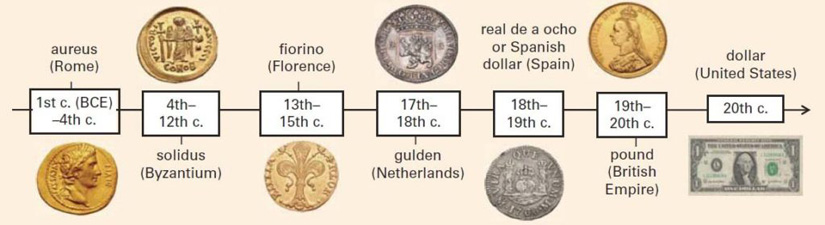
On average international monetary systems last about 35 to 40 years before the tensions they create becomes too great and a new system is required. Prior to the first world war, major economies existed on a hard gold standard. Intra-wars, most economies returned to a “semi-hard” gold standard.
After WWII, the world was promised a new international system was designed — the Bretton Woods order — with the dollar tied to gold, and other key currencies tied to the dollar. When that broke down at the start of the 1970s, the world moved on to a fiat system where the dollar was not backed by a commodity, and was therefore not anchored. This system has now reached the end of its usefulness. An understanding of the drivers of the 30-year debt super cycle illustrates the system’s tiredness. These include the unending liquidity that has been created by the commercial and central banks under this anchorless international monetary system. That process has been aided and abetted by global regulators and central banks that have largely ignored monetary targets and money supply growth.
However, with the dollar being weaponized through economic sanctions against Russia and others it is clear that the existing system is far from neutral – or sustainable. The US government has used its dominance of the world financial system to put itself above the law and pursue policies that benefit its elite. A new monetary system must address these issues.
Policy & Inflation
Monetary policy is an important tool in government economic policy. Governments may choose to peg currency to a country’s own currency, or to the value of another currency. A government may also choose to float its currency against other currencies. These policies aim to stabilize inflation rates within a given economy. Monetary policy is often used to manage exchange rate fluctuations. For example, when a central bank increases interest rates, it raises the cost of borrowing money and reduces demand for foreign currency. Central banks raise interest rates during recessions to prevent deflationary pressures.
Inflation rates are usually measured using the Consumer Price Index (CPI), an index that measures price changes across all goods and services purchased by consumers. CPI inflation refers to a sustained increase in prices over time, while headline inflation refers to the annual rate at which prices change. However, there is not necessarily any correlation between the two. For example, if prices fall due to deflation, then both the headline and the core inflation will decline. If prices rise due to inflation, then the headline inflation may remain stable or even decline, while the core inflation rises. Therefore, when comparing inflation rates across countries, it is important to take into account the different measurement methodologies employed by each country.
The recovery from the stagflation of the 1970s required steep increases in interest rates in major advanced economies, which played a prominent role in triggering a string of financial crises in emerging market and developing economies. “Developing economies will have to balance the need to ensure fiscal sustainability with the need to mitigate the effects of today’s overlapping crises on their poorest citizens,” said Ayhan Kose, Director of the World Bank’s Prospects Group. “Communicating monetary policy decisions clearly, leveraging credible monetary policy frameworks, and protecting central bank independence can effectively anchor inflation expectations and reduce the amount of policy tightening required to achieve the desired effects on inflation and activity.” The current juncture resembles the 1970s in three key aspects: persistent supply-side disturbances fueling inflation, preceded by a protracted period of highly accommodative monetary policy in major advanced economies, prospects for weakening growth, and vulnerabilities that emerging market and developing economies face with respect to the monetary policy tightening that will be needed to rein in inflation.
The G.F.C
After the 2008 financial crisis, many countries were forced to adopt stricter monetary policy. Emerging markets suffered the most during the Great Recession. Financial stability became top priority and monetary policies were designed to stabilize economies and ensure price stability. Central banks raised interest rates and implemented quantitative easing programs, reducing liquidity to avoid overheating and recession. But the risk of high inflation remained and the effects of the 2009 H1N1 pandemic were still felt. As a result, many governments adopted stimulus packages to stimulate economic growth. These measures included tax cuts and spending increases. Governments also took steps to contain the spread of the novel coronavirus SARS-CoV-2. While the effect of these actions remains unclear, the impact on the global economy will likely be felt in the years ahead.
The Global Financial Crisis (GFC) started in 2007 when American mortgage companies went bankrupt after misreporting income and assets. Banks, real estate firms and other institutions had loans and investments tied to those mortgages, and many of them suffered huge losses. The crisis spread to the rest of the globe because of the interconnectedness of the global economy. Many countries’ governments bailed out failing banks, which meant taxpayers could lose money if the value of the nation’s currency declined. Unemployment increased dramatically, especially in the United States, and millions of Americans faced foreclosure. Recovery from the crisis took longer than usual, leaving millions of families worse off than before the crash.
The Pandemic
The COVID-19 pandemic has highlighted the nexus between sovereigns and banks across emerging market economies. Banks hold significant amounts of local government bonds, which have risen sharply since the onset of the crisis. A broader sovereign-debt crisis could lead local governments to default and trigger large scale bank runs or liquidity crises. These events can constrain lending and investment activity, which can spill over to other sectors of the economy. This may have negative consequences for growth, employment, and inflation.
Policymakers must weigh the risks posed by a sovereign-debt crisis against the benefits of maintaining financial intermediaries. If a country experiences a high level of default, financial institutions face higher costs and reduced access to international capital markets, while borrowers can lose their access to credit lines at a lower cost than previously experienced.
How’s the Housing Market?
https://www.youtube.com/watch?v=KYF6lTbxx6U

One of the trends in the housing market is year on year, consistent, real estate price increases, it indicates the possibility of an impending housing market crash or at a minimum, a more benign correction.
Because there is a finite amount of land, it appreciates (and not all land is buildable). The average annual increase in the price of a home (including the land) is roughly 4%.
Home appreciation and the real estate sales market are affected when home values level out or plateau.
When a sufficient number of sellers cannot find a buyer for their property, they may reduce the price to attract more purchasers. After the 2008 financial crisis, many countries were forced to adopt tighter monetary policy. Emerging markets such as China and India suffered the most during the Great Recession. Financial stability became the top priority and monetary policies were designed to stabilize economies and avoid overheating and recession.
Central banks increased interest rates and implemented quantitative easing programs. They reduced liquidity. Some countries adopted stimulus packages which included tax cuts and spending increases. While the effect of these actions remain unclear, the impact on the real estate industry is clear: less people want to buy homes.
In 2016, US home prices rose at the slowest pace in six years. The rate of house price appreciation slowed to 2.9% compared with 2011’s 5.5% rise. By comparison, Canada’s real estate market continued to climb, with home prices up 7.3% last year. Australia’s housing market is also gaining momentum, with a 9.8% jump in median home prices in 2017.
Many economists correctly predicted that the coronavirus has caused a sharp drop in demand for goods and services, including housing. Many experts believe this will be offset by increased supply due to new construction. However, some economists argue that we need to take into account the long term effects of the pandemic.

Since the mid 1980’s, Australia has experienced an unprecedented housing bubble. Homeowners borrowed money to buy houses they couldn’t afford. Banks made lots of loans based on risky mortgages, many of which were never paid back. When the economy crashed in 2008, banks failed, and many homeowners lost everything. Now, it’s taking longer to sell homes than ever before. To fix our financial system, we need to end the government policies that caused the crash. We should not allow big banks to gamble with other peoples’ money again. Instead, we should create a strong banking system that doesn’t put taxpayers at risk. We must break up the big banks and give consumers more choice.
As interest rates begin their gradual ascent in Australia, there are a lot of nerves in the domestic property market. Dr Philipp Hofflin from Lazard Asset Management believes these concerns are well-founded, singling out a couple of eyebrow-raising metrics.
During the Japanese property bubble, Japan set the record for the ratio of the value of its residential land to GDP, which was more than 330%. Australia has just beaten that record. A 200 basis point rise in interest rates could translate into a 16% hit to property values – this is near that point where you risk a loss of faith in the market.
In 2019, Dr Hofflin wrote that forecasting the “timing of any (real estate) downturn would be difficult, if not impossible, to predict.” Since then, interest rates have continued to bottom, boosting domestic property prices. Based on the metrics below, it looks like a residential property decline could be coming sooner rather than later.

Currency Competition
Money is one of humankind’s most remarkable innovations. It makes it possible to trade products and services across great geographic distances, between people who may not know each other and have no particular reason to trust each other. It can even be used to transfer wealth and resources over time. Without money, trade and commerce—all human economic activity, really—would be severely constrained in terms of time and space.
The privilege of issuing money is synonymous with economic power. So it should come as little surprise that history is replete with examples of currency competition, both within countries and between them. In China, home of the world’s first paper money, currencies issued by private merchants and provincial governments competed for many centuries. Indeed, banknotes issued by governmental and private banks coexisted in China as late as the first half of the 20th century.

In ancient societies, objects such as shells, beads, and stones served as money. The first paper currency appeared in China in the seventh century, in the form of certificates of deposit issued by reputable merchants, who backed the notes’ value with stores of commodities or precious metals.
In the 13th century, Kublai Khan introduced the world’s first unbacked paper currency. His kingdom’s bills had value simply because Kublai decreed that everyone in his domain had to accept them for payment on pain of death. Kublai’s successors were less disciplined than he was in controlling the release of paper currency.
Subsequent governments in China and elsewhere gave in to the temptation of printing money recklessly to finance government expenditures. Such wantonness typically leads to surges of inflation or even hyperinflation, which in effect amounts to a precipitous fall in the quantity of goods and services that a given sum of money can buy. This principle is relevant even in modern times.
Today, it is trust in a central bank that ensures the widespread acceptance of its notes, but this trust must be maintained through disciplined government policies. To many, however, cash now seems largely anachronistic. Literally handling physical money has become less and less common as our smartphones allow us to make payments easily.
The way in which people in wealthy countries like the United States and Sweden, as well as inhabitants of poorer countries like India and Kenya, pay for even basic purchases has changed in just a few years. This shift may look like a potential driver of inequality: if cash disappears, one imagines, that could disenfranchise the elderly, the poor, and others at a technological disadvantage.
In practice, though, cell phones are nearly at saturation in many countries. And digital money, if implemented correctly, could be a big force of financial inclusion for households with little access to formal banking systems.
The decline of physical cash, once valued as the most definitive form of money, is but a small feature of the rapidly changing financial landscape, though. One of the most dramatic forces of change has been the rise of cryptocurrencies, which have shaken long-held precepts about money and finance.
Cryptocurrency – The future & beyond?
Bitcoin, the cryptocurrency that started it all, may not have much of a role to play in this monetary future.
Initially it was designed to enable people to complete transactions pseudonymously (using only digital identities rather than real ones) and without the intervention of a trusted third party such as a central bank or financial institution. In other words, anyone with a computer could conduct transactions—no credit card or bank account necessary. Coins are issued and transactions validated through a computer algorithm that runs autonomously; the identity of its creator remains unknown to this day.
Cryptocurrency is not money. It’s a protocol for exchanging value. And it’s still in its infancy stage. But what makes Crypto different from all previous forms of currency is that there is no one controlling it. The entire network keeps track of who owns how much bitcoin at any given time. No single person or organization can manipulate the market by creating more bitcoins when they want to sell them and fewer when they want to buy them.
This means that if you own some Crypto today, you will always be able to exchange it for the same amount of dollars tomorrow. You won’t need your credit card or even your bank account number to do so because it’s all done electronically and instantaneously.
That’s is a big deal. The fact that money can now move around the world like this has profound implications. It could also spell the end of fiat currencies as we know them, with their inherent problems such as inflation, government control, and economic instability.
But what if Cryptocurrency doesn’t work out? What if its value collapses and it turns into worthless 1’s & 0’s? Or what if governments decide they don’t want people using this form of currency? Will there be any way to get back to where we are now?
This is a very important point: Because Cryptocurrency is not backed by any government or central bank, they can never become worthless as long as people want them. In fact, many economists believe that the value of bitcoin will increase over time as more and more people buy and sell them. If this happens, then there will never be a day when all bitcoins in existence have been transferred to someone’s wallet.
How does this work? The way Crypto’s are created and transferred is unique. There are no banks involved, just computers. When a person (or computer) wants to do so.
However, what happens after that? – What’s the next step in our quest for a new monetary system?
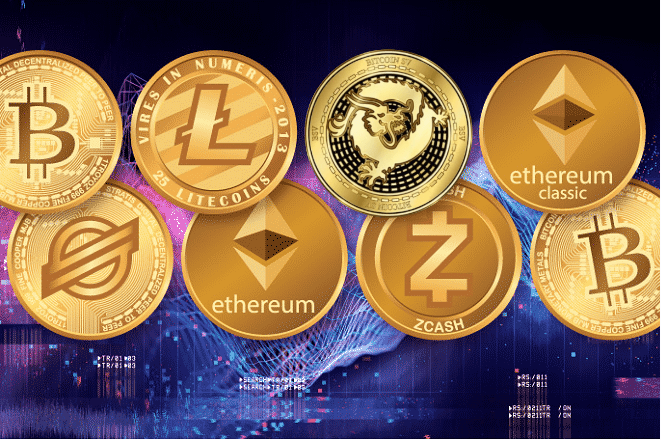
Cryptocurrency is often described as an alternative currency or payment system, but it can also be used as a store of value. The network’s decentralized structure means there is no single point of failure. In addition, Crypto’s are pseudonymous, meaning they do not require users to identify themselves in order to use them. This makes it impossible for governments to control the money supply.
Cryptocurrency Prices vs. Stock Prices
Interest in Bitcoin and cryptocurrencies as an investment asset class emerged sometime around late 2016, as witnessed by the slow, steady price increases through that year into 2017 when Bitcoin’s price crossed $1,000. Media outlets covered the phenomenon, and prices climbed throughout the year to peak at nearly $17,000 before settling down to fluctuate between $3,000 and $10,000. The Covid-19 pandemic in 2020 created a significant worry for investors, who panicked because businesses and economies were slowing and shutting down.
Many investors fled the stock market and placed their assets in Bitcoin during the pandemic, whose price quadrupled through 2021, then fell to hover around $30,000 until May 2022, when its price began to drop and fell below $30,000 for the first time since June 2021.
During the pandemic, the S&P 500—the stock index used most by investors to gauge the market—lost more than 110 points as investors transferred their assets to alternative investments.1 The U.S. economy floundered into a short recession, then began a recovery in which stock prices climbed to more than double their value at the end of the recession.
By the time the index and economy had recovered to pre-pandemic levels, investors were convinced that Bitcoin was a new asset class that could be used to realize returns under some of the most austere market conditions. Many corporations had already begun to sink money into cryptocurrency, and Bitcoin’s performance during the pandemic reinforced their positions and outlooks. Bitcoin had made its investing debut and attracted a large following of retail investors, institutions, and enterprises.
Bitcoin, which had been traded like a stock for several years on cryptocurrency exchanges by early adopters, began to be treated like a stock by traders and investors—solidifying its position as an asset class.
Giant Leap – The Next Steps
We have been experimenting with money for hundreds of years. Different ideologies and doctrines. And nothing has proven successful and fair for very long. Most only last for around 40 years before a change is applied or its replaced. The basis of money has always been with the powers of the day. No other way has been considered I don’t think. If it was the elite in power would have rejected it. The ruling elite never structure a system to predominately favour the people. Some had good intentions, many did not. Some were incompetent and some were simply criminal. But ultimately they all failed.
The way money is created and by whom is wrong. Every dollar in existence is borrowed from central banks who charge interest on that money. The only way to not pay any more interest is to give all the money back. Obviously that can’t happen because we would have no money left to exist. So we’ve been enslaved into a debt trap with no sunset period. We are all locked into a corrupt system. Central banks created all that money out of thin air. They didn’t have it. Is it right they earn real interest on something they never had in the first place and charge that interest forever. And, they need to lend us the money to pay that interest because interest is paid in money. Its ridiculous. Banks do the same. Every dollar lent by banks, debt, is created out of thin air. They earn real money from nothing.

That seemed to work fairly well for the good of people, until banking became an industry of greed. Until then the system offered me a life everyone before me could only ever dream of. But the current system has been so corrupted that itself has become a tool for banks to suck the life out of us. The amount of interest we pay to banks from what we earn is stupendous. All that interest is taken out of our economies funneled to the rich few. Banks and the rich have worked out a way to literally be sitting atop a pyramid with vacuums hoovering up all the money in the world into their pockets unfettered. They have become evil geniuses.
Governments can’t be trusted to create the money. Banks have become a fraternity of thieves. So what’s the answer? Maybe Cryptocurrency is the foundation of the answer. It too is in experimental times but the concept it is built on has real merit. The creation and management of money is taken from the state and handed to the people in the form of computer code. I understand how it works and it is not only a new form of money, its a movement toward responsible creation, responsible saving and borrowing. A measured and predictable creation process and a hard cap on the amount created give us certainty. For example, there will only ever be 21M bitcoins. Each is divisible 100M times which totals 2.1 quadrillion pieces of this currency. Enough to cater for the entire global economy. It also has longevity. The last bitcoin wont be mined until the year 2140.
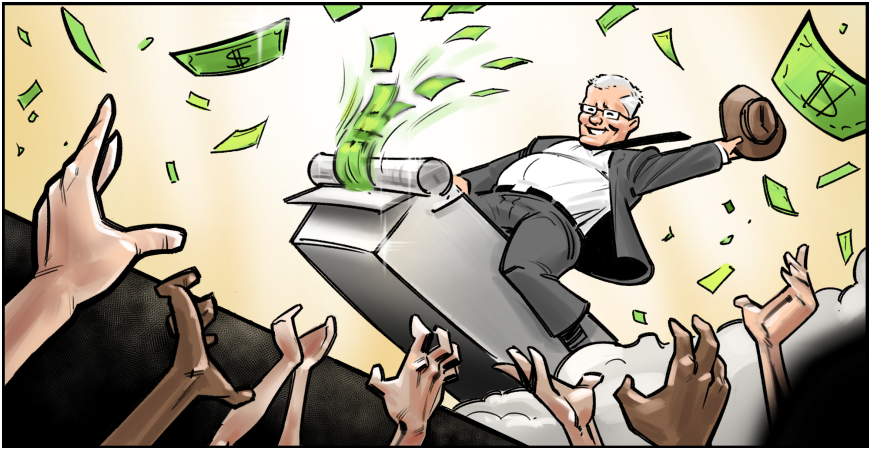
Criticism of Cryptocurrency is brought about by human nature once again, using it as an instrument to gamble on. Its wild price fluctuations is classic human folly at play. This is the first time anyone in the world can bet on the same thing 24/7 from a device in their pocket. It has opened the market to everyone in the world who wants to play. One day the playing will subside and the price will stabilise. At what price is a mystery. By the time it does, fiat currencies may all be gone so there will be other things to price a bitcoin against. Chickens, goats & cows? Maybe gold? Maybe when money passes, gold will become the principle form of valuing bitcoin and bitcoin will price everything else. Maybe value needs to be redefined altogether. Sometimes, its the unknown that is most intriguing.
The Brics of a new system?
BRICS, a grouping of major emerging economies – Brazil, Russia, India, China, and South Africa – has become one of the trending buzzwords in global public opinion lately. After Iran and Argentina applied to join the BRICS mechanism, Saudi Arabia, Turkey, and Egypt also plan to knock on the door of the BRICS for official membership. We’ll touch on them a little here, but leave the entirety of the topic for another Blog.
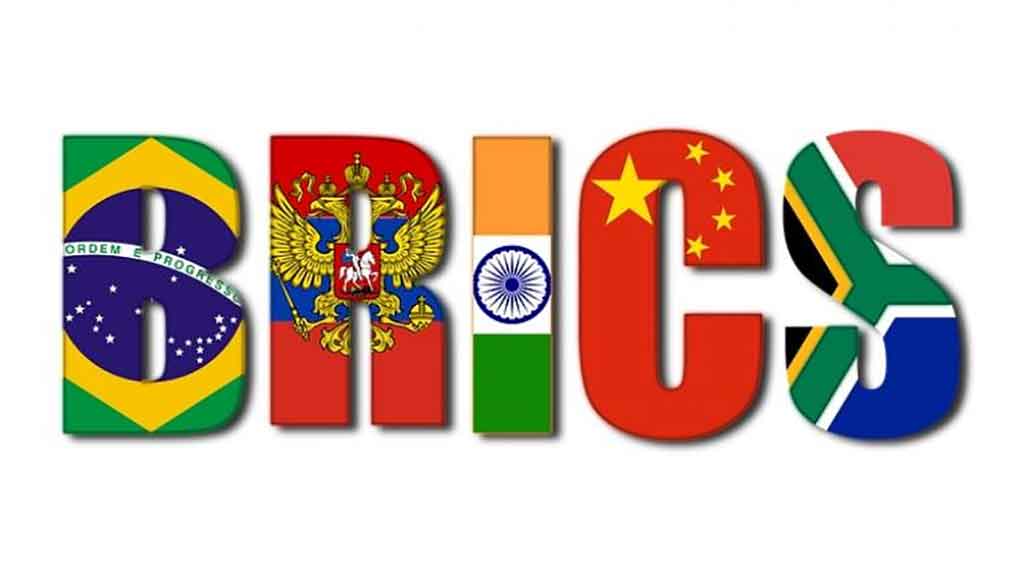
Crises have been surfacing on a global level since the outbreak of the Russia-Ukraine conflict. Quite a few countries, especially those in the West, are being confronted with crippling inflation, untenable energy costs, looming recessions and food shortage. Yet BRICS countries have shown much less sensitivity and vulnerability than the US and European countries amid these challenges.
The reason stems from BRICS members’ own strength and enhanced cooperation within the group. According to the World Bank, Russia holds the world’s largest natural gas reserves, the second largest coal reserves, and the eighth largest oil reserves.
Brazil has diverse agricultural products and vast mineral wealth. Their different advantages plus the promotion of BRICS’ cooperation on food supply and the exchanges of national currencies have made the group less impacted by the global crises. What BRICS is against are power politics, hegemony, the law of the jungle, all of which basically determine that in international politics, only major powers have a say, and small countries must be obedient, or even be exploited.
Against this backdrop, BRICS calls for fairness and justice, a global governance in which developing countries have their due status and their voices can be heard. The BRICS just want to bring a balance in the current global order. At the current stage, BRICS stock exchanges have little capacity to create a large impact on global financial markets.
De-dollarisation
De-dollarisation essentially describes a move away from this world order to one where nations sell their US treasuries to hold reserves in other currencies or gold. Simultaneously they seek to use their own currencies for transactions between their most important trade partners.
A de-dollarisation coalition is likely to emerge when members of the dollar-based system are dissatisfied with the international status quo, including the dollar’s exorbitant privilege, the incumbent US global leadership, and the existing rules and norms.
Apart from de-dollarisation, a BRICS single gold trading system would also help to strengthen domestic currency stability because it would free BRICS members from being subject to foreign pricing. BRICS alternatives to SWIFT ( Society for Worldwide Interbank Financial Telecommunications ) and De-dollarizing Global Financial Infrastructure. In another effort to reduce their dependence on the US dollar, BRICS members have been building their own global payment infrastructures for international transactions that are independent of the US dollar and can serve as alternatives to SWIFT, the leading messaging network for financial transactions worldwide.
A BRICS single gold trading system would facilitate the creation of a new gold pricing benchmark based upon global physical gold trading rather than gold derivatives.
In early June 2022, US magazine Newsweek said that when NATO’s “largest expansion in decades” took place, “Beijing and Moscow are looking to take on new members of their own” blocs, and BRICS was named particularly in the article. By the end of June, the Hill published a headline, “An out-of-touch G7 could lose global leadership to BRICS.”
Hedging against the Future
Whatever the future may bring for currency and how we trade, There has always been one absolute. Throughout history, for more than 5000 years, gold has always been a trusted store of wealth. In uncertain times, people still look to gold for protection. Gold will always have uses as currency or a tradeable commodity. It is an element of every country’s reserve currency.
Gold is also used as a hedge against inflation, recession and economic uncertainty. A rising price of gold indicates that investors expect higher interest rates and/or falling prices. This means that if you buy gold, you are betting on lower inflation or higher interest rates. When the opposite happens, your investment loses value.
China, India, Brazil, Russia, South Africa and Turkey have joined forces to create a cryptocurrency called BRICS Coin. It will be backed by gold and silver and distributed through a network of local banks. This coin is designed to aid trade within the group and provide a common unit of account.
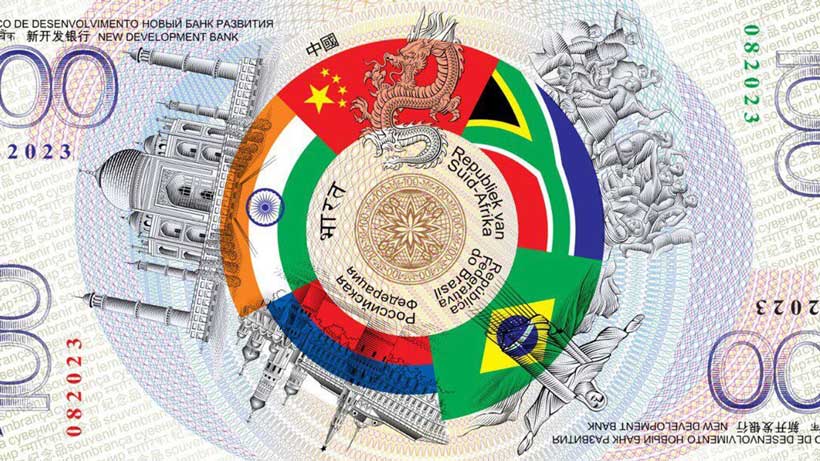
Gold is also used as a form of insurance against unexpected events such as natural disasters, political instability, war and terrorist attacks. It will also protect against the upcoming ‘currency war’, ensuring that whatever the future brings and the ‘money’ we use, gold will be an essential component.
At Private Vaults Australia, based in Redcliffe QLD, we can store any valuable treasure you might have in our high security facility, you will have peace of mind knowing that your precious items are safe. We are also Gold Bullion Australia, with a 42 year trading history and a worldwide bullion merchant trading out of Singapore, we will always be in a position to assist you in buying or selling bullion.
Call us today at 1300 888 782 for an appointment, tour or any additional information you may need!

2 months free. No long-term commitment necessary.
Limited spots available.


