
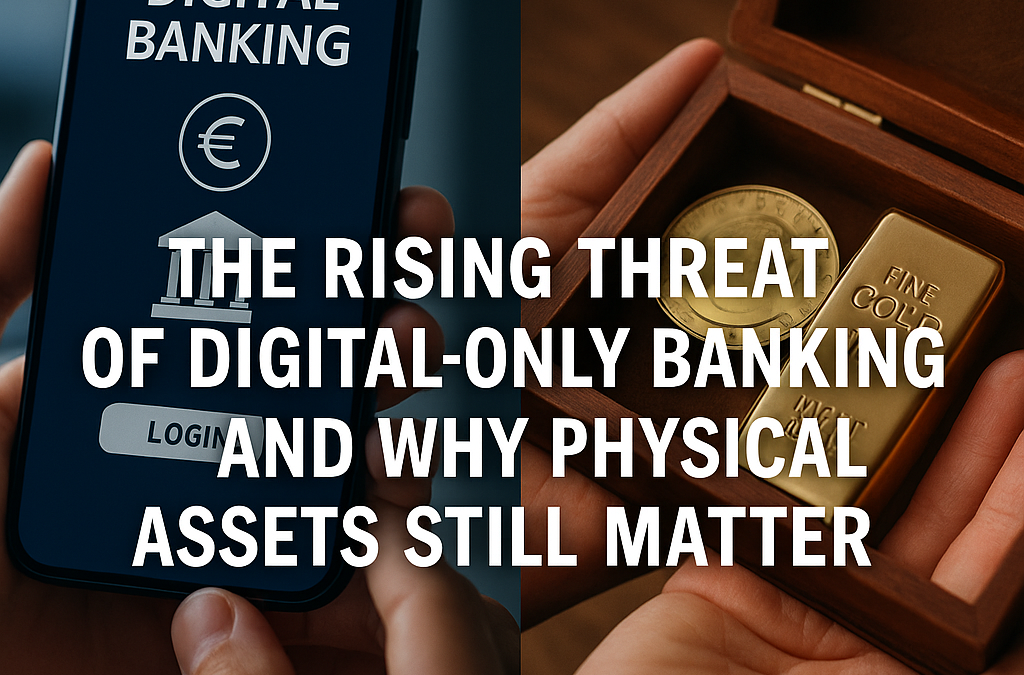
The Rising Threat of Digital-Only Banking, Physical Assets Still Matter
The rising Threat of Digital-Only Banking, Physical Assets Still Matter. Banking is changing faster than most people realise. Branches are closing, cash is disappearing, and online systems are becoming the only gateway between Australians and their money. On the surface, it looks like progress — convenient, seamless, and cash-free.
But beneath the surface lies an uncomfortable truth: the more digital our money becomes, the more control governments and institutions can exercise over how we use it.
That’s why tangible, privately held assets such as physical gold and silver — stored independently through Gold Bullion Australia and Private Vaults Australia — are no longer just investments; they’re insurance against overreach.
The March Toward a Cashless World
In 2019, over 27% of Australian transactions were made in cash. By 2025, that figure is projected to fall below 5%, according to the Reserve Bank of Australia. Major banks have closed hundreds of branches, and even rural towns are struggling to find an ATM.
While digital banking is convenient, the shift removes something fundamental — choice. Without physical cash, every transaction becomes data, every purchase traceable, and every dollar subject to digital approval.
The Government’s Growing Influence Over Money and Why Physical Assets Still Matter
Australia’s move toward a Digital ID framework and exploration of Central Bank Digital Currencies (CBDCs) could give regulators direct insight into — and potential control over — individual spending.
CBDCs would be government-issued digital money that replaces or supplements cash. They could be programmed with conditions: when, where, and on what you can spend.
Proponents say CBDCs will prevent fraud and improve efficiency. Critics worry they enable unprecedented financial surveillance and the power to freeze or limit transactions.
When money becomes code, whoever writes the code holds the power.
What Happens When Access Isn’t Guaranteed from Threat of Digital-Only Banking
Imagine a world where:
- Transactions can be declined because you exceed a weekly spending cap.
- Certain purchases are flagged as “non-essential.”
- Bank outages or policy updates temporarily lock accounts.
These scenarios aren’t science fiction; they’re already being tested in pilot programs overseas.
During such disruptions, individuals relying entirely on digital systems have no fallback — no cash reserves, no tangible stores of value.
Physical assets, however, sit entirely outside that framework.
Why Physical Assets Still Matter
Physical gold and silver represent ownership without permission. They can’t be digitally frozen, taxed by algorithm, or devalued overnight by monetary policy. When stored independently in secure facilities like Private Vaults Australia, they remain fully under your control — accessible, insurable, and private.
At Gold Bullion Australia, investors can purchase authenticated bullion with certificates of ownership, then store it directly in a private vault to eliminate systemic exposure.
Digital Convenience vs. Financial Autonomy
Digital banking undeniably offers speed, but it also introduces fragility:
- System outages can lock thousands out of funds.
- Cyberattacks can cripple entire payment networks.
- Policy decisions can impose spending restrictions overnight.
True financial resilience requires a parallel track — an element of wealth that exists beyond the reach of electronic control.
Precious metals fill that role perfectly.
The Privacy Divide
In a digital-only environment, privacy becomes a luxury. Every tap, transfer, and payment builds a permanent data profile. That profile isn’t owned by you — it’s stored, shared, and sometimes monetised by others.
By contrast, a gold coin or bar held in a private safe-deposit box is completely private, law-abiding, and outside the digital footprint. It restores the simple idea that some parts of personal wealth should remain personal.
Lessons from Overseas
Recent examples show how easily digital systems can be weaponised:
- European and North American banks have frozen accounts during civil unrest or political investigations.
- Cash withdrawals have been capped in certain economies during crises.
- Central banks are trialling programmable digital currencies that expire after set dates to stimulate spending.
Australia is not immune to these trends. A diversified approach — blending traditional banking with tangible assets — offers protection without rejecting innovation.
How Precious Metals Protect Independence
1. Non-Digital Value
Gold and silver exist outside electronic networks; their worth isn’t defined by a screen balance.
2. Universally Recognised
They can be traded globally, regardless of internet connectivity or national policy.
3. Inflation-Resistant
When central banks inflate currency supply, metals typically appreciate, preserving purchasing power.
4. Politically Neutral
Precious metals don’t depend on governments or institutions for legitimacy.
Together, these traits make bullion a natural hedge against the risks of a fully digitised economy.
Combining Security with Practicality
Modern private vaults like Private Vaults Australia bring professional security without bank dependency:
- 24/7 monitored facilities in repurposed bank buildings.
- Individual, non-pooled boxes for full client ownership.
- Optional insurance for declared contents.
- Confidential access for authorised family members.
When paired with authenticated purchases from Gold Bullion Australia, this system offers a seamless, compliant, and independent way to preserve value.
A Balanced Wealth Model
A sensible approach isn’t to abandon digital banking but to complement it:
- Keep digital accounts for daily transactions.
- Maintain a portion of wealth in physical form for independence and emergency liquidity.
- Review holdings annually to balance convenience with control.
This blended model ensures flexibility without surrendering sovereignty.
Emotional Security: The Confidence of Access
Knowing that part of your wealth exists beyond screens and passwords provides real psychological relief. If networks fail or policies shift, you can still access tangible assets — no approvals, no waiting periods, no frozen balances.
For families, that reassurance is invaluable.
Practical Steps to Reclaim Control
- Assess exposure: Identify how dependent you are on digital systems.
- Acquire physical assets: Purchase bullion through Gold Bullion Australia
- Store independently: Lease a safe-deposit box at Private Vaults Australia.
- Maintain some cash reserves for immediate liquidity.
- Educate family members on how and why tangible wealth matters.
These steps transform concern into concrete preparedness.
Conclusion — Control What You Can Hold
Digital convenience should never come at the cost of autonomy. If the only access to your wealth requires permission from a system, then that system ultimately owns it.
By holding tangible assets — gold, silver, and privately stored valuables — Australians reclaim a degree of freedom that digital systems can’t replicate.
Gold Bullion Australia provides the means to acquire real metal;
Private Vaults Australia ensures it remains safe, insured, and truly yours.
In 2025 and beyond, the smartest strategy isn’t rebellion — it’s resilience: Stay digital for convenience, but stay tangible for control. Because financial independence should never depend on a login.
Supporting References
- Reserve Bank of Australia – Payments Data
- Bank for International Settlements – CBDC Frameworks
- World Gold Council – Gold as a Strategic Asset

Recent Comments