
Your Rights, Your Responsibilities, and Why Private Vaults Offer the Strongest Protection. It’s important to understand the Legal Aspects of Safe Deposit Boxes.
Most Australians assume a safe deposit box is simple:
“You rent a box, put valuables inside, and retrieve them when needed.”
But the legal reality is far more complex — particularly when comparing bank vaults vs private vaults, understanding who has access, and knowing how ownership, privacy and estate rules actually work.
This guide gives you the clear, practical, legally grounded information every Australian needs to protect:
- jewellery
- bullion
- wills & deeds
- passports
- cash reserves
- digital backups
- identity documents
- family heirlooms
And it shows why Private Vaults Australia (PVA) provides a stronger legal framework and far greater protection than any bank vault.
(General information only — not legal advice.)
Who Legally Owns the Contents of a Safe Deposit Box?
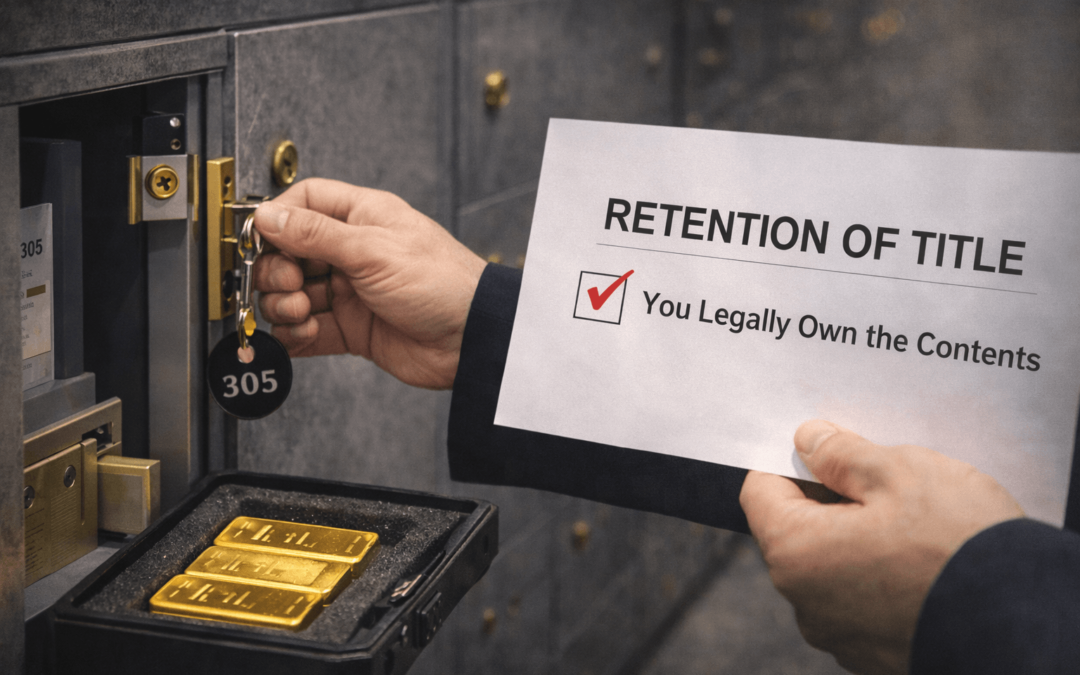
Why “Retention of Title” at PVA Matters**
Legally:
✔ YOU own the contents
✔ The vault provider does NOT
This principle is called Retention of Title.
At Banks
Banks retain greater control than most customers realise:
- they own the vault
- they have conditional access
- they may open or drill boxes under compliance or administrative rules
- contents may be inspected after death or delinquency
Your privacy is conditional, not absolute.
At Private Vaults Australia
PVA provides a superior legal structure:
- PVA cannot open your box
- PVA cannot inspect or inventory contents
- PVA cannot interfere with ownership
- only you hold the physical client keys
- your items remain outside all banking oversight
This ensures your assets remain legally separate, private and sovereign.
Who Can Access a Safe Deposit Box?
(Bank Rules vs Private Vault Rules Are Completely Different)**
Banks
Bank access rules allow staff or administrators to access your box under:
- court orders
- APRA or ASIC intervention
- unpaid rental fees
- deceased estate processing
- internal investigations
- content verification
Banks can and do open boxes.
Private Vaults Australia
PVA uses a strict dual-key security model:
- your key (exclusive, cannot be copied)
- PVA guard key (controls the outer door only)
PVA staff cannot open your locker.
✔ No override keys
✔ No administrative access
✔ No internal inspections
✔ No unauthorised staff access
Privacy is absolute unless lawfully compelled by a judge.
What Happens to a Safe Deposit Box When the Renter Dies?
This is one of the most misunderstood legal areas.
At Banks
The box is immediately frozen.
Access often requires:
- death certificate
- probate
- letters of administration
- an appointment at a branch
- inspection with a bank officer present
Banks typically catalogue contents, destroying privacy.
At PVA
PVA follows a private, client-centered process:
- authorised persons may be nominated
- executors provide legal documentation
- PVA does not inspect or inventory contents
- retention of title remains with the estate
- access occurs privately and efficiently
Estate handling at PVA is faster, cleaner and far more discreet than banks.
Can Creditors, Police or Courts Access a Safe Deposit Box?
Yes — but only through formal legal process.
✔ Court orders
✔ Bankruptcy trustees
✔ Police warrants
✔ Official probate requests
Key Difference
- Banks often disclose more than necessary
- PVA discloses nothing unless legally compelled
PVA cannot open your locker voluntarily, protecting your rights and privacy.
Are the Contents of a Safe Deposit Box Insured?
Banks vs PVA (Huge Legal Difference)**
Banks
❌ No insurance
❌ No liability
❌ No coverage for theft, fire, or flood
❌ No protection from staff error
PVA
✔ $20,000 complimentary insurance
✔ Optional upgrades beyond $1 million
✔ Underwritten by global insurers
✔ Coverage for theft, fire, flood, disasters
This legal protection is unique to private vaulting.
Can the Government Seize or Freeze a Safe Deposit Box?
Banks Are Inside the Financial System
This means they are subject to:
- APRA intervention
- liquidity freezes
- statutory management
- branch shutdowns
- systemic bail-in scenarios
- temporary access suspensions
Even if you legally own the contents, you may not be able to access them.
PVA Is Outside the Financial System
PVA is:
✔ not a bank
✔ not controlled by APRA
✔ not part of systemic bail-in legislation
✔ not tied to banking infrastructure
✔ not vulnerable to bank outages
✔ governed only by criminal law, not financial law
This independence is one of your strongest legal protections.
Who Is Liable If Contents Are Lost or Damaged?
Banks
You bear the full risk.
Banks contractually exclude liability.
PVA
PVA provides:
- UL-rated vault construction
- 24/7 security monitoring
- environmental stability
- flood-resilient location
- included insurance
Because insurance exists, liability protection exists.
What Items Are Legally Allowed in a Safe Deposit Box?
Allowed
- jewellery
- precious metals
- cash
- documents
- titles & deeds
- passports
- wills
- watches
- collectibles
- crypto hardware wallets
- backup drives
Prohibited
- firearms
- explosives
- narcotics
- anything illegal
- perishables
Private vaults give far more clarity than banks, which often publish limited rules and reserve discretion.
Are Safe Deposit Boxes Protected From Family Disputes or Divorce?
Joint Renters
Both have equal legal rights.
Single Renters
Only the renter — or executor — may access.
Family Disputes
PVA cannot grant access without valid legal documents.
Because PVA does not know your contents, no staff member can disclose information during disputes.
This protects your privacy during:
- separations
- estate disputes
- business conflicts
- family disagreements
Why Private Vaults Offer Stronger Legal Protection Than Banks
Private Vaults Australia provides:
✔ Exclusive key control (no overrides)
✔ No staff access
✔ No content inspection
✔ Complimentary insurance
✔ Flood-free, purpose-built facility
✔ Independence from the banking system
✔ Retention of title — contents remain fully yours
✔ Discreet private viewing rooms
Banks simply cannot offer this level of legal strength.
Conclusion: A Safe Deposit Box Protects You — A Private Vault Protects You Legally
Security is only half the story.
The legal framework surrounding your safe deposit box determines:
- ownership certainty
- inheritance outcomes
- privacy rights
- access control
- insurance protection
- financial-system independence
Banks provide vaults —
but private vaults provide legal safety, privacy and true asset sovereignty.
This is why Australians increasingly choose Private Vaults Australia for storing what truly matters.
📞 1300 888 782
🔐 Protect Your Valuables With Australia’s Most Secure & Legally Independent Private Vault
Unit 3 – 73 Redcliffe Parade, Redcliffe


2 months free. No long-term commitment necessary. Limited spots available.
