
Are Safe Deposit Boxes Still Relevant in 2026?
In a world of cloud storage, digital banking, cryptocurrency and increasingly sophisticated home security systems, it is easy to assume that the traditional safe deposit box has become outdated.
After all, why store important documents in a physical vault when they can be scanned and stored in the cloud? Why keep precious metals or jewellery in an off-site facility when modern home safes, alarms and security cameras are readily available?
But there is one important distinction that technology cannot eliminate:
Some things are physical, irreplaceable and worth protecting outside your home.
Gold and silver bullion cannot be stored in the cloud. Family heirlooms cannot be backed up to a hard drive. Original legal documents, jewellery, watches, collectibles and other tangible valuables still need somewhere secure to be stored.
And when you consider the risks associated with burglary, fire, flood, natural disasters, cybercrime and simply having high-value assets concentrated in your home, the case for secure off-site storage remains compelling.
So, are safe deposit boxes still relevant in 2026?
We believe they are — perhaps more than ever.
What Is a Safe Deposit Box?
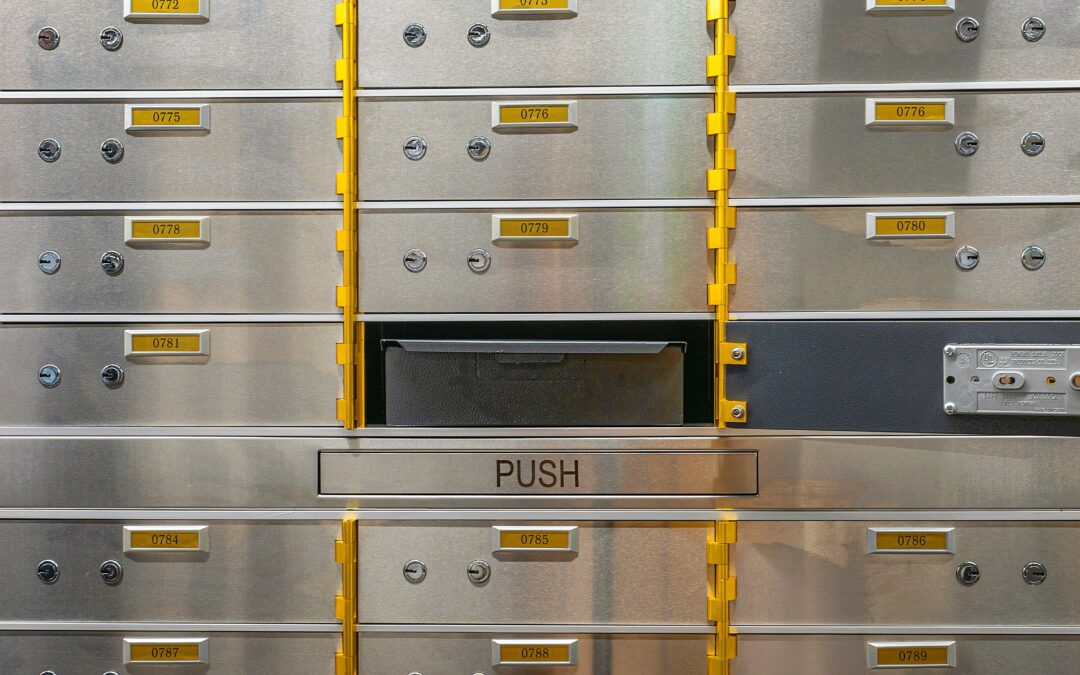
A safe deposit box is a secure, individually allocated storage compartment designed to protect valuables and important items.
People commonly use safe deposit boxes to store:
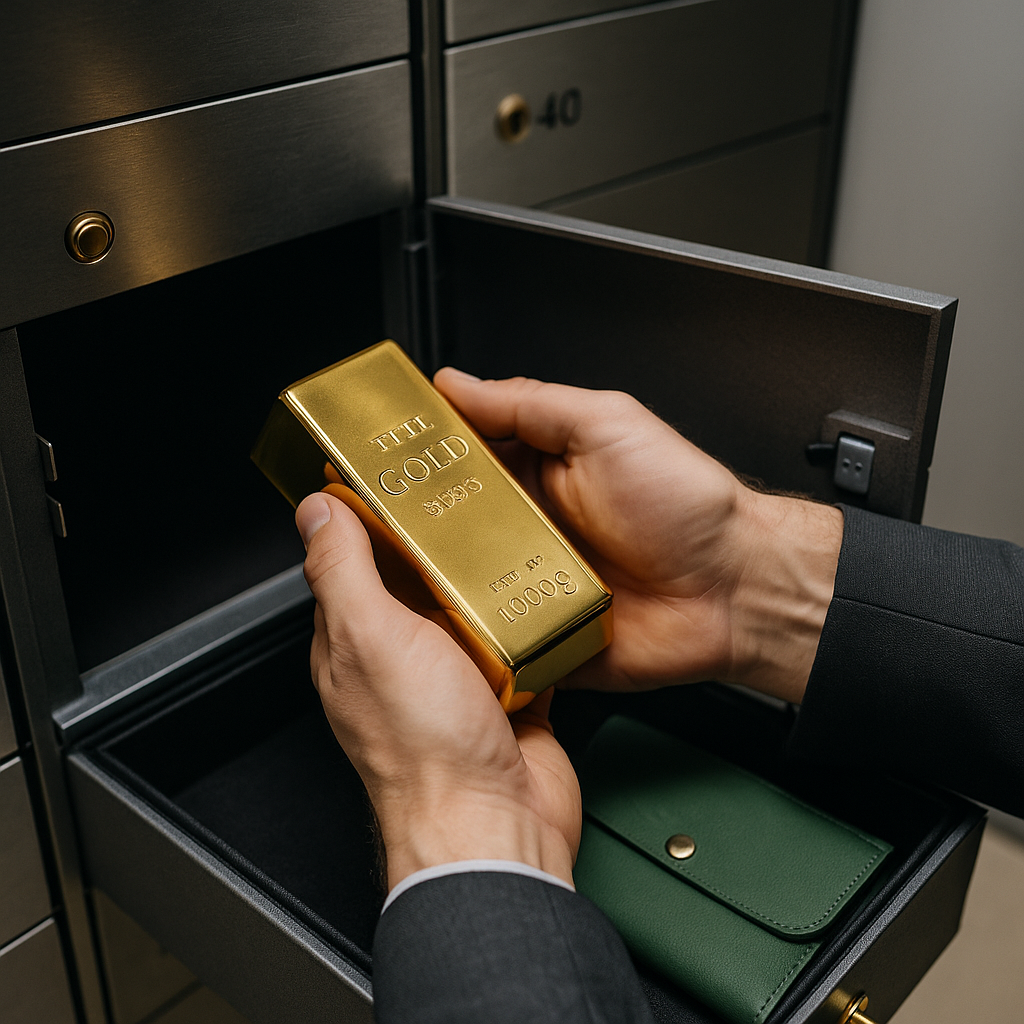
- Gold, silver and platinum bullion
- Jewellery and watches
- Family heirlooms
- Important documents
- Wills and estate documents
- Passports and certificates
- Collectibles
- Digital asset backups and recovery information
- Other valuable or difficult-to-replace items
Traditionally, safe deposit boxes were most closely associated with banks. However, as banking services have changed and many financial institutions have reduced or discontinued safe deposit box services, independent private vault facilities have become an increasingly important alternative.
Private vault facilities provide an additional option for people who want their valuable possessions stored securely away from their home, without relying solely on a domestic safe or a bank.
The Modern Problem: Your Home Is Not a Vault
For most people, home is where their most valuable possessions are concentrated.
Think about everything that may be inside a typical household:
Jewellery.
Watches.
Important documents.
Passports.
Family photographs and heirlooms.
Gold and silver.
Collectibles.
Cash.
Digital asset backups.
Perhaps even valuable business records.
The problem is that your home needs to serve many purposes. It is a place to live, not a purpose-built high-security storage facility.
Even the best home security system cannot completely eliminate the risk of burglary, fire, flood or other unforeseen events.
And there is another consideration that is often overlooked.
If someone knows that valuable assets are stored inside your home, your security system may not be enough to protect them, or your family.
Moving your most valuable and irreplaceable possessions away from your home removes them from many of these risks entirely.
1. High-Value Assets Deserve High-Value Security
Home safes, alarm systems, security cameras and insurance all have an important role to play.
But they each have limitations.
A home safe is still inside the property.
A security camera can record an intruder, but it cannot necessarily stop them.
An alarm can alert you or a monitoring service, but it does not make your valuables disappear from the property.
And insurance can provide financial compensation, but it cannot replace an irreplaceable family heirloom, important document or sentimental possession.
A professionally operated private vault provides another layer of protection by moving your most valuable possessions away from your home altogether.
This is particularly relevant for people holding substantial amounts of physical precious metals.
Rather than keeping significant quantities of gold or silver at home, investors can separate their wealth from their residential property and store it in a purpose-built secure facility.
The principle is simple: don’t put all your valuable assets in the same location.
2. Digital Security Hasn’t Made Physical Storage Obsolete
One of the biggest changes since the original version of this article was written is the enormous growth of digital assets.
Today, people routinely store important information in cloud accounts, online banking platforms, password managers and digital wallets.
Digital storage is incredibly useful.
But it isn’t a replacement for physical security.
The two solve different problems.
A digital copy of your passport is useful, but it doesn’t replace the original document.
A photograph of a family heirloom doesn’t replace the heirloom.
A digital record of your bullion holdings doesn’t replace the physical metal.
And a backup of your cryptocurrency wallet information is only useful if the physical recovery information can ultimately be accessed when it is needed.
Cybersecurity is also an increasingly important consideration.
Passwords can be compromised. Accounts can be hacked. Devices can be lost or damaged. Online services can experience outages, and digital information can be accidentally deleted or made inaccessible.
This doesn’t mean that cloud storage or digital security should be avoided.
Quite the opposite.
The strongest approach is often to use both digital and physical security — with each protecting what the other cannot.
3. Your Home Safe Still Has Limitations
A quality home safe can be an excellent security measure for smaller valuables.
But it is important to understand what a home safe is, and what it isn’t.
A domestic safe remains inside your home.
That means it is still exposed to the wider risks affecting your property, including fire, flood, burglary and other disasters.
There is also the issue of accessibility.
If an intruder enters your property and knows that a safe is present, the safe itself can become a target.
Depending on its size and installation, a safe may potentially be removed from the property, attacked on site, or its contents accessed under duress.
There is another reason people choose not to keep significant wealth at home:
You shouldn’t have to put yourself or your family in a difficult situation to protect your valuables.
Keeping your most valuable possessions somewhere outside your home can reduce the amount of wealth physically present during a home invasion.
4. Physical Wealth Still Needs Physical Protection
Australia has a strong and growing interest in physical precious metals.
Gold, silver and platinum are tangible assets. They are not dependent on a website, password, exchange or digital platform to exist.
But physical ownership creates its own responsibility:
Where do you keep it?
A few coins or a small amount of bullion may be relatively easy to secure at home.
But as a physical precious metals holding grows, so does the importance of professional storage.
Keeping substantial quantities of bullion at home can create several problems:
- Increased exposure to burglary
- Increased concentration of wealth in one location
- Insurance considerations
- Fire and flood risk
- The challenge of concealing and securing larger quantities
- Potential risks to family members during a home invasion
A private bullion locker or safe deposit box allows investors to separate their physical wealth from their residential property.
For serious bullion investors, this can be an important part of an overall wealth protection strategy.
5. Some Things Are Simply Irreplaceable
Financial assets can often be valued in dollars.
But not everything important can.
Consider an original family document.
A collection passed down through generations.
A sentimental piece of jewellery.
An important legal document.
A watch with significant personal history.
Photographs, letters or other family memorabilia.
If these items are lost to theft, fire or flood, an insurance payment may help financially, but it cannot recreate their history or sentimental value.
This is one of the most compelling reasons to use a safe deposit box.
You aren’t simply protecting the monetary value of an item. You’re protecting the item itself.
6. Off-Site Storage Creates an Extra Layer of Protection
One of the simplest principles of security is diversification.
Investors understand this when it comes to their portfolios.
You don’t necessarily want all your investments concentrated in one asset, one company or one country.
The same principle can apply to physical security.
If all your valuable possessions are stored at home, they are exposed to the same risks.
By moving some of your most important possessions to a secure off-site facility, you create physical separation between your home and your wealth.
If something happens to your property, your valuables stored elsewhere remain protected.
This can provide an additional layer of resilience that a home security system alone cannot provide.
So, Are Safe Deposit Boxes Still Relevant in 2026?
Absolutely.
Technology has changed dramatically since safe deposit boxes first became popular.
We now have cloud computing, biometric security, cryptocurrency, digital banking, smart home systems and sophisticated cybersecurity.
But none of these technologies has changed a fundamental fact:
People still own physical things that need physical protection.
In fact, the growth of digital wealth and increasingly complex security threats may make the concept of separating your most important assets from your home more relevant than ever.
A safe deposit box isn’t an alternative to modern technology.
It’s another layer of protection.
Your home security system protects your home.
Your insurance protects you financially against certain risks.
Your cloud storage protects digital information.
Your cybersecurity protects your online accounts.
And a professionally secured safe deposit box can protect the physical assets and documents that cannot simply be backed up.
Protect What Matters Most
At Private Vaults Australia, we provide secure safe deposit boxes and bullion storage options at our independent private vault facility.
Our facility is designed to provide customers with a secure location away from the home for storing precious metals, jewellery, watches, important documents and other valuable possessions.
Security features include advanced access controls, facial recognition and PIN authentication, with dedicated vaulting facilities designed for different storage requirements.
Customers also benefit from complimentary insurance, providing an additional layer of protection for eligible stored valuables.
Whether you’re a precious metals investor, a collector, a business owner or simply someone with possessions that are too important to leave at home, a safe deposit box provides a simple principle of wealth protection:
Keep what matters most somewhere designed to protect it.


2 months free. No long-term commitment necessary. Limited spots available.

Recent Comments